Imaginary Universe: Richard Kolker’s Computer Generated Images

Computer Generated Image by Richard Kolker
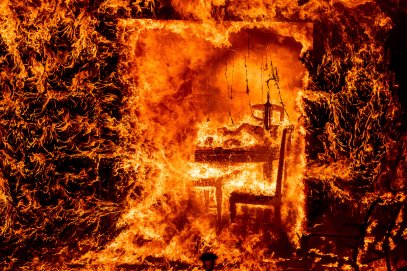
Gumball from the series Trap Code, 2012

"Much of my work deals with how we engage with, explore and document online virtual worlds and online role-playing games. 'Trap Code' examines the idea that we define the limitless freedom of the online environment by imposing physical restrictions and constraints with which we are familiar in the real world—gravity, solid matter, real estate and land values, avatars which look human. We have to be restrained in order to engage with unfamiliar freedom.

'Gumball' represents a familiar cultural icon (I think!…I’m from London and some things aren’t quite the same here!), but simultaneously diverges from normality in a distinctly sinister manner."

London-based artist Richard Kolker has been working exclusively with computer generated imagery (CGI) for the last six years. But the fact that he comes from a traditional photographic background, having previously worked as a commercial photographer for Getty Images, would surprise no one: Kolker’s imagined pictures of still lifes, interiors and landscapes are rendered with such precision and clarity that they appear like true, documentary shots.

Inspired by the online virtual world Second Life and games such as World of Warcraft, which both rely heavily on GCI, Kolker sought to create images that were the antithesis of the aesthetic found in these programs. “I wanted to create images that reflected a more mundane nature, as opposed to the more fascinating environments people were experiencing through the anonymity of an avatar,” he says.

TIME Magazine

Richard Kolker's computer generated image featured in the Oct. 29, 2012 issue of TIME.

That quieter mood is seen in the image created for Kolker in this week’s education-themed issue of TIME. For a story that examines the potential of free online courses to upend traditional higher education, Kolker created a dark image of an empty classroom. “A lot of my photos have this dark shadowy entity to it,” he explains. “I wanted to convey the emptiness with this classroom image—like all the life has been taken out.”

Kolker’s images typically take a couple days to create. And while the method may be seen as unconventional, he says the process itself feels similar to actual shooting. “I build a model like I would with plastic or cardboard, and I light it as I would in real life—but just with digital tools,” Kolker says. “And then I photograph it with a computer tool [Maxon Cinema 4D] that has a shutter speed and aperture—so in many ways, it’s fairly conventional.”

For the most part, Kolker relies on his self-described “vivid imagination” to conceptualize pictures, although he’ll use an actual photograph as a starting point from time to time. In one series, “Reference, Referents,” Kolker looked to famous works by artists whose pieces recalled photographic elements, including David Hockney, and tried to recreate the perfect picture that might have inspired said work.

He still carries cameras around when he travels, but says he never takes pictures anymore, preferring to continue his CGI work. “The whole world is shifting from analog to digital, and I love thinking about this digital code that you can use to create images of places around the world without ever having to go there,” Kolker says. “I love the total freedom of it—the ability to create whatever it is in your imagination or fantasy.”

Richard Kolker is an artist based in the U.K. See more of his work here


Related Topics: , , ,

Latest Posts

Steve Ruark—AP

Honoring the Fallen: One Photographer’s Witness to 490 Dignified Transfers

Since April 2009, the Associated Press has sent a still photographer to every dignified transfer of servicemen and women killed in Iraq or Afghanistan open to the media. Most often it is freelancer Steve Ruark, who has now attended almost 500 transfers since 2009.

Read More
TOPSHOTS-ISRAEL-ULTRA-ORTHODOX-JEWS-BELZ-WEDDING

Pictures of the Week: May 17 – May 24

Saudi citizens rest after presenting Saudi Billionaire HRH Prince al Waleed bin Talal with petitions for his help at a desert camp outside of Riyadh, in Saudi Arabia, February 27, 2013.   Like many families across Saudi Arabia who are barely scraping above the poverty line each month, many poor Saudis rely on the hope of the charity of others to survive. (Credit: Lynsey Addario/ VII)

Rich Nation, Poor People: Saudi Arabia by Lynsey Addario