The Ultra-Holy City: Photographs by Oded Balilty

Oded Balilty—AP for TIME
All photos taken in Jerusalem in July, 2012.
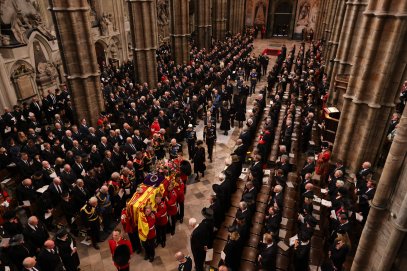
Ultra-Orthodox Jews attend the funeral of Rabbi Yosef Shalom Elyashiv.

The Kiryat Yovel section of Jerusalem is a seemingly serene urban glade, but in recent years, tension has grown in the area as more and more ultra-Orthodox families have bought up homes and apartments in what has historically been a majority secular neighborhood.

This shift in Kiryat Yovel is indicative of a greater trend in Jerusalem. As Oded Balilty’s photographs depict—here, and in the new issue of TIME—a more and more common visual element in Jerusalem is jet black fabric.

Jerusalem is rapidly becoming a city of ultra-Orthodox, the intensely observant Jews whose entire lives are devoted to studying Torah, and living by the rules it dictates, as interpreted by the rabbi who leads their specific sect, and issues the dress code. They are the fastest growing population in Israel today and in 20 years, demographers say, the ultra-Orthodox will account for 1 in 5 Israelis.

Oded Balilty—AP for TIME

The international cover of the August 13, 2012 issue of TIME.

Historically, the movement known in Hebrew as haredi—or trembling, as in God-fearing—flowed from the summary rejection of the Enlightenment by charismatic clerics in Eastern Europe. Their edicts on attire, hair style and separation of the sexes lend a preserved-in-amber quality to ultra-Orthodox neighborhoods, which in broad terms simply reject modernity—the movement so many prominent Jews (think: Spinoza) did so much to usher in. Housing shortages have pushed the ultra-Orthodox into neighborhoods across the city, but the places they have lived longest, near Jerusalem’s downtown core, tend to be run down. In large part, that’s because ultra-Orthodox tend to be poor, with an average of seven children and a father who studies at a yeshiva all day, rather than working for wages. But it’s not only a matter of money.

Pre-occupied with the Next World, “they practice anti-aestheticism; they don’t consider aesthetics important,” says Menachem Friedman, a Bar Ilan University professor who devoted his career to studying ultra-Orthodox and marvels at their growing power.

“I remember in my childhood, symbols of religion, like sidelocks, was something you had to be ashamed of,” says Friedman, 76 this year. “Most of the rabbis shaved. You had to be modern. You had to adjust yourself to the world. Not any more.”

Karl Vick is TIME’s Jerusalem bureau chief.

Oded Balilty is a Pulitzer-Prize winning photographer for the Associated Press based in Tel Aviv. LightBox featured his work earlier this year in The Art of StorytellingThe Stone Throwers of Palestine and The Ultimate Prize Fighters: Practicing Peace through Boxing in Israel.

Related Topics: , , , ,

Latest Posts

USA. Illinois. Chicago. 1948. An alley between overcrowded tenements, with garbage thrown over the railings of the back porches. Most of the area's tenants were transient. Contact email:New York : photography@magnumphotos.comParis : magnum@magnumphotos.frLondon : magnum@magnumphotos.co.ukTokyo : tokyo@magnumphotos.co.jpContact phones:New York : +1 212 929 6000Paris: + 33 1 53 42 50 00London: + 44 20 7490 1771Tokyo: + 81 3 3219 0771Image URL:http://www.magnumphotos.com/Archive/C.aspx?VP3=ViewBox_VPage&IID=2S5RYDI201Y8&CT=Image&IT=ZoomImage01_VForm

In Memoriam: Wayne Miller (1918 – 2013)

Wayne Miller, the legendary Magnum photographer known for his photographs of the World War II Pacific theater and the post-war streets of Chicago, passed away Wednesday at the age of 94.

Read More
Michael Ackerman—Agence VU/Aurora Photos

Darkness Visible: On World Goth Day, Photos of Romance and Shadow

Oklahoma Tornado

Moments of Hope in Oklahoma: One Photographer’s Story