Ceremonies of Disappearance: Kimiko Yoshida’s Critique of Identity

Kimiko Yoshida
Kimiko Yoshida
Painting (Condottiere Micheletto Attendolo da Cotignola at the Battle of San Romano by Paolo Uccello). Self-portrait
2010

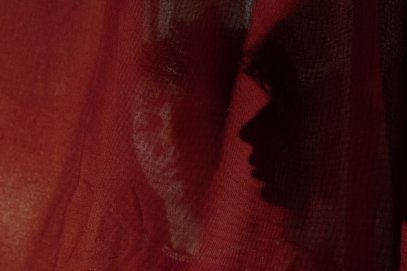
“The preoccupation with I has become a cliché in contemporary art,” says Kimiko Yoshida. The Japanese photographer challenges that cliché by creating large, color photos of herself in which she wears elaborate costumes that reference a wide range of subjects, from haute couture and indigenous cultures to the canon of Western painting. By constantly changing what at first appears to be a self-portrait, Yoshida says, “I am basically saying that there is no such thing as a self-portrait,” she says. “Each of these photographs is actually a ceremony of disappearance. It is not an emphasis of identity, but the opposite—an erasure of identity.”

Born in Tokyo in 1963, Yoshida came of age in a tradition-bound culture where the conservative attitude towards the role of women left her alienated and unhappy. She studied literature and worked in fashion, which allowed her to hone her creative eye, but she remained frustrated. Over her father’s objections, she enrolled in the Tokyo College of Photography. Even after she had her degree in hand, she felt her options for a creative career in Japan were limited and moved to France to escape those stifling confines.

“Since I fled my homeland to escape the mortifying servitude and humiliating fate of Japanese women, I amplified through my art a feminist stance of protest against contemporary clichés of seduction, voluntary servitude of women, identity and the stereotypes of gender,” Yoshida says.

Yoshida critiques the idea of a firm and unchanging identity in a variety of ways, most obviously by physically changing it. In her “Brides” series, she often photographs herself in indigenous garb that she borrows from museums. Meanwhile, in her “Paintings” series, she and her husband repurpose items from the archives of Spanish fashion designer Paco Rabanne. But no matter what the source material is, Yoshida riddles the final product with playful anachronisms and cross-cultural references that undermine its perceived authenticity. The Paco Rabanne garments and accessories, made between 1965 and 2000, are themselves full of unusual materials, from plastic bottles to CD-roms. Yoshida adds a twist by refusing to wear them as intended: shoes become headdresses while dresses become hats. Yet another twist comes when you realize that Yoshida’s odd remixes actually reference paintings from Western art history, from Caravaggio to Picasso to Warhol. The fact that many of her images are nearly monochromatic threatens to drown whatever individuality that may remain. Finally, Yoshida often displays her images on walls in overwhelming numbers, thus minimizing their specialness.

The end result is evocative of Cindy Sherman, another artist who dons costumes in front of the camera and who even references art history like Yoshida. And while the meanings of Sherman’s work reside in its surfaces, Yoshida’s work provides the artist with an internal, metaphysical space. “Art is above all the experience of transformation,” explains Yoshida. “All that’s not me, that’s what interests me. To be there where I think I am not, to disappear where I think I am, that is what matters.” In the end, perhaps the photographs themselves are simply evidence of this performance. But it is interesting that Yoshida, an artist who is driven by the denial of the self, has made them with such a singular and memorable voice.

Yoshida has solo shows at St. Jakobshalle in Basel, Switzerland, and the Musée Pavillon Vendôme-Dobler in Aix-en-Provence, France, both opening June 13. Her work is also in a group show at the Musée de la Tapisserie in Angers, France that opens June 29. More of her work can be seen here.

Related Topics: , , , , , , , , ,

Latest Posts

Steve Ruark—AP

Honoring the Fallen: One Photographer’s Witness to 490 Dignified Transfers

Since April 2009, the Associated Press has sent a still photographer to every dignified transfer of servicemen and women killed in Iraq or Afghanistan open to the media. Most often it is freelancer Steve Ruark. To mark Memorial Day, TIME presents a gallery of the almost 500 transfers he has attended since 2009.

Read More
TOPSHOTS-ISRAEL-ULTRA-ORTHODOX-JEWS-BELZ-WEDDING

Pictures of the Week: May 17 – May 24

Saudi citizens rest after presenting Saudi Billionaire HRH Prince al Waleed bin Talal with petitions for his help at a desert camp outside of Riyadh, in Saudi Arabia, February 27, 2013.   Like many families across Saudi Arabia who are barely scraping above the poverty line each month, many poor Saudis rely on the hope of the charity of others to survive. (Credit: Lynsey Addario/ VII)

Rich Nation, Poor People: Saudi Arabia by Lynsey Addario