A Natural Order by Lucas Foglia

Lucas Foglia
Lucas Foglia
The following images are a selection from the book A Natural Order photographed between 2006-2010.

Rita and Cora Aiming, Tennessee

From urban beekeeping to artisanal pickling, there’s an uptick in America’s interest in doing it ourselves. Photographer Lucas Foglia has been in touch with this pre-consumer age mindset his entire life, having grown up on a small Long Island farm where, he says, his family “heated our house with wood, farmed and canned our food, and bartered the plants we grew for everything from shoes to dental work.” For the past five years the Yale-trained artist has been photographing a network of off-the-gird communities in the southeastern United States. The work has just been published in a lush, large-format monograph, A Natural Order.

Tucked away in the woods and fields of rural Tennessee, North Carolina, Virginia and Georgia, some of the communities Foglia visited are religious, others are united by a passion for embracing ancestral ways of hunting, foraging and building, others are motivated by predictions of global economic collapse.

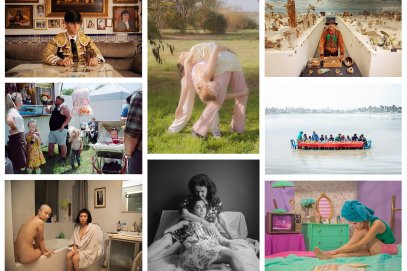
Foglia’s subjects live with equal measure grit and beauty. In one photo, a toddler in a grubby, winged fairy dress reclines on a quilt and gazes at the sky, a gnawed venison rib clutched in one hand. In another, a salvaged sink is propped on boards, and tucked into edenic bramble. His photos of interiors highlight their simple rustic allure, is if shot for a high-end design magazine for survivalists. A bathroom painted in a hip shade of teal features an abundance of fluffy monogrammed towels, pillar candles on a rough-hewn pedestal; in the claw-foot tub a butchered deer soaks, the seeping haunches surrounded in watermelon-pink bathwater.

The stories of what compelled any given individual to pursue this experience are untold in A Natural Order. Instead, through Foglia’s keen eye for detail and tremendous sense of composition, we simply get a glimpse of their way of life. However, clothing—or, alternatively, the lack thereof—clues us in as to which type of group they might belong. There are some long-haired parents and their cherubic children in their natural state. There are those wearing self-styled outfits made of hides and natural fibers. And there are Christian women and girls who wear modest homemade frocks, even in the swimming hole.

The general theme Foglia has taken on has been touched on by other contemporary art photographers over the last ten years, including Justine Kurland, Joel Sternfeld and Taj Forer. However, Foglia is particularly interested in the way these communities straddle the ancestral and the modern, as his own family did. “They do not wholly reject the modern world. Instead, they step away from it and choose the parts that they want to bring with them,” says Foglia of his subjects. Interested readers can even ferret out the websites of some of the communities he includes, and find themselves tempted to go there and take classes on traditional building or foraging for food. One can also gain insight—and learn real skills— from, Wildifoodin’ the anonymously –authored, illustrated ‘zine included with the book. Part journal, part survival manual, it reads like a poet’s version of the Whole Earth Catalog, the bible for 1970’s back-to-the-landers.

Foglia’s book implies that there is a new movement afoot, one whose philosophies are diverse, but all share self-reliance as a key value. If so, it’s right on time, economically speaking. In an era when houses can be foreclosed, and most of our food is from unknown sources, the beauty that Foglia’s pictures captures is a recognition of human needs: the needs to create, and to control our destinies.

A Natural Order is published by Nazraeli Press. You can see more of Lucas Foglia’s work here.

Joanna Lehan is a writer and curator living in New York City.

Related Topics: , , , , ,

Latest Posts

USA. Illinois. Chicago. 1948. An alley between overcrowded tenements, with garbage thrown over the railings of the back porches. Most of the area's tenants were transient. Contact email:New York : photography@magnumphotos.comParis : magnum@magnumphotos.frLondon : magnum@magnumphotos.co.ukTokyo : tokyo@magnumphotos.co.jpContact phones:New York : +1 212 929 6000Paris: + 33 1 53 42 50 00London: + 44 20 7490 1771Tokyo: + 81 3 3219 0771Image URL:http://www.magnumphotos.com/Archive/C.aspx?VP3=ViewBox_VPage&IID=2S5RYDI201Y8&CT=Image&IT=ZoomImage01_VForm

In Memoriam: Wayne Miller (1918 – 2013)

Wayne Miller, the legendary Magnum photographer known for his photographs of the World War II Pacific theater and the post-war streets of Chicago, passed away Wednesday at the age of 94.

Read More
Michael Ackerman—Agence VU/Aurora Photos

Darkness Visible: On World Goth Day, Photos of Romance and Shadow

Oklahoma Tornado

Moments of Hope in Oklahoma: One Photographer’s Story