Harlem Revisited: A New Look at Dawoud Bey’s New York Portraits

Dawoud Bey
Dawoud Bey
Harlem, NY, 1978

Present-day Chicago is not Harlem in 1979. Present-day Harlem isn’t even Harlem in 1979. But at the Art Institute of Chicago’s new exhibition Dawoud Bey: Harlem USA, some things have stayed the same. The show comprises the 25 original prints from Bey’s noteworthy 1979 exhibition of the series at the Studio Museum in Harlem, plus five previously unpublished prints from the same era.

Dawoud Bey

Smokey, 2002

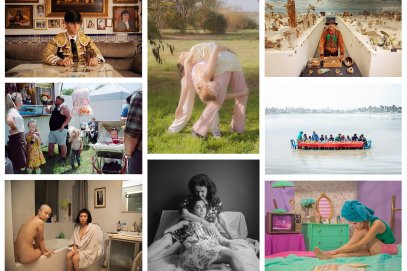
The impetus for Harlem USA, which was made throughout the 1970s, was Bey’s visit to the Harlem on my Mind show at New York City’s Metropolitan Museum of Art in 1969; it took him ten years to start and finish the work. And although the images in the show don’t superficially resemble Bey’s later work—they are small, made with a handheld 35mm camera, impromptu and monochromatic, unlike the later work seen at right—the photographer says that the series contains the seeds of his later work. “They gave me my initial sense of how to engage people in front of the camera,” Bey told TIME in an email. “I first learned how to translate the physical experience of the human subject into compelling photographic form during the years I spent making pictures in Harlem.”

He is not the only one who sees the thread running through his work. Matthew Witkovsky, a curator at the Art Institute of Chicago, says that some artists show from their first work a strong sense of who they are and what they want to do. Bey, according to him, is one of those lucky people.

Dawoud Bey

A Boy in Front of the Loews 125th St. Movie Theatre, Harlem, NY, 1976

And Witkovsky says that the photographs, though they remain unchanged, are still fresh. “[Bey] managed to take that ability that cameras have to give you total specificity and imbue it with some kind of other-time-other-place quality,” he says, pointing out an example: in Bey’s picture of a boy outside a movie theater, seen at left, the clothes are quintessential 1970s but the pose is a classic contrapposto. “It’ll always be timely,” says Witkovsky, “because it’s a little bit out of time.”

Bey, who now lives in Chicago, says the photographs themselves are not the only constant. “My feelings about the work haven’t really changed,” he says. “I am still concerned with trying to make resonant photographs of ordinary people.”

Dawoud Bey is a Chicago-based photographer and professor. See more of his work here.

Dawoud Bey: Harlem USA will be on view at the Art Institute of Chicago from May 2 – Sept. 9. The Renaissance Society in Chicago will also present a retrospective of his work, entitled Picturing People, which includes the later work featured in this post, from May 13 – June 24.

Related Topics: , , , , , , , , , , ,

Latest Posts

Saudi citizens rest after presenting Saudi Billionaire HRH Prince al Waleed bin Talal with petitions for his help at a desert camp outside of Riyadh, in Saudi Arabia, February 27, 2013.   Like many families across Saudi Arabia who are barely scraping above the poverty line each month, many poor Saudis rely on the hope of the charity of others to survive. (Credit: Lynsey Addario/ VII)

Rich Nation, Poor People: Saudi Arabia by Lynsey Addario

With its vast oil wealth, Saudi Arabia has one of the highest concentrations of super rich households in the world. But an estimated 20 percent of the population, if not more, lives in crippling poverty.

Read More
USA. Illinois. Chicago. 1948. An alley between overcrowded tenements, with garbage thrown over the railings of the back porches. Most of the area's tenants were transient. Contact email:New York : photography@magnumphotos.comParis : magnum@magnumphotos.frLondon : magnum@magnumphotos.co.ukTokyo : tokyo@magnumphotos.co.jpContact phones:New York : +1 212 929 6000Paris: + 33 1 53 42 50 00London: + 44 20 7490 1771Tokyo: + 81 3 3219 0771Image URL:http://www.magnumphotos.com/Archive/C.aspx?VP3=ViewBox_VPage&IID=2S5RYDI201Y8&CT=Image&IT=ZoomImage01_VForm

In Memoriam: Wayne Miller (1918 – 2013)

Michael Ackerman—Agence VU/Aurora Photos

Darkness Visible: On World Goth Day, Photos of Romance and Shadow