If You Smoke Cigarettes in Public: Prostitution in Morocco

Tiana Markova-Gold
Tiana Markova-Gold
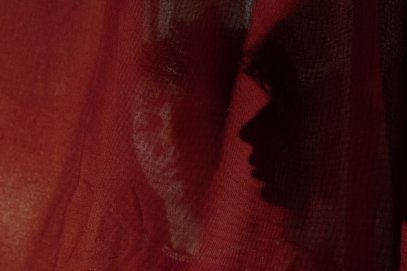
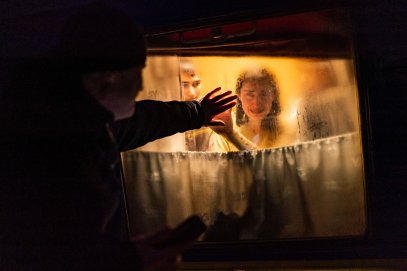
This gallery is an exclusive sneak peek into the 20th Lange-Taylor Prize project, with photographs by Tiana Markova-Gold and writing by Sarah Dohrmann.

More than one person we talked to said that becoming a prostitute was a matter of choice. One woman said no Moroccan woman would ever be left to live on the street — everyone has a family in Morocco. She said it’s custom that women, no matter how old they become, live with their families. But what if there is no father to support her? I asked. What if the girl's father is abusive, sexually or otherwise? Or what if she just wants to live on her own? She said that didn’t happen in Morocco. Only women of the elite class live on their own, and if a poor girl leaves her family and goes into prostitution, that's her choice.

In 2010, the Center for Documentary Studies at Duke University awarded the twentieth Dorothea Lange–Paul Taylor Prize to photographer Tiana Markova-Gold and writer Sarah Dohrmann to produce their project If You Smoke Cigarettes in Public, You Are a Prostitute: Women and Prostitution in Morocco. The pair spent three and a half months of this year in the country, documenting the lives of sex workers to explore the complex nature of the choices Moroccan women face.

They approached the project with the express intent to “dismantle preconceived notions of the prostitute as sexual deviant,” an idea that Markova-Gold has explored in earlier projects on her own in the Bronx and Macedonia. Dohrmann had previously lived in Morocco, where she learned Moroccan Arabic and had begun writing about her interactions with female Moroccan sex workers. Their method is collaborative and unconventional, pairing Markova-Gold’s impressionistic and occasionally inscrutable photographs with Dohrmann’s narrative and very personal literary style. With time and space, the pair was able to cultivate deep and nuanced relationships with several women, resulting in a complex and holistic story. Working in a developing Islamic country during the Arab Spring allowed the pair to explore how other issues affected the subjects of their project, such as globalization, religion, politics and migration.

A wide-ranging and challenging subject deserves such a patient and extensive approach, and the pair has recently begun to work with their material in earnest. Typically the work for the Lange-Taylor prize is not revealed until the project is finished, but Dohrmann and Markova-Gold agreed to share some of the ideas they are working on exclusively with LightBox.

Markova-Gold shot primarily with film, but also used her iPhone to provide more instant feedback and evidence of the situations she was shooting. The photographs in the series above consist of iPhone photos, processed with the ShakeItPhoto app, which she found to be the closest approximation to her film work.  As the project progressed, she found the images resonated beyond their immediate use and ultimately are relevant to the final project. They are paired with some of Dohrmann’s preliminary writing, which was written in a daily log of their time together, and focuses on one of their subjects, Khadija. The final project, slated for completion by the end of the year, will feature film and digital photography from Markova-Gold, and a long-form essay by Dohrmann.

Editor’s note: All of the Moroccan women’s names published here have been changed in the interest of protecting their safety.

Tiana Markova-Gold is a freelance documentary photographer based in Brooklyn, New York. More of her work can be seen on her web site and her blog.

Sarah Dohrmann is a Brooklyn-based writer. Her work has appeared in Bad Idea: The Anthology, Teachers & Writers Magazine, and The Iowa Review. You can read more of her work on her blog, Und You Vill Like It.

Related Topics: , , , ,

Latest Posts

Saudi citizens rest after presenting Saudi Billionaire HRH Prince al Waleed bin Talal with petitions for his help at a desert camp outside of Riyadh, in Saudi Arabia, February 27, 2013.   Like many families across Saudi Arabia who are barely scraping above the poverty line each month, many poor Saudis rely on the hope of the charity of others to survive. (Credit: Lynsey Addario/ VII)

Rich Nation, Poor People: Saudi Arabia by Lynsey Addario

With its vast oil wealth, Saudi Arabia has one of the highest concentrations of super rich households in the world. But an estimated 20 percent of the population, if not more, lives in crippling poverty.

Read More
USA. Illinois. Chicago. 1948. An alley between overcrowded tenements, with garbage thrown over the railings of the back porches. Most of the area's tenants were transient. Contact email:New York : photography@magnumphotos.comParis : magnum@magnumphotos.frLondon : magnum@magnumphotos.co.ukTokyo : tokyo@magnumphotos.co.jpContact phones:New York : +1 212 929 6000Paris: + 33 1 53 42 50 00London: + 44 20 7490 1771Tokyo: + 81 3 3219 0771Image URL:http://www.magnumphotos.com/Archive/C.aspx?VP3=ViewBox_VPage&IID=2S5RYDI201Y8&CT=Image&IT=ZoomImage01_VForm

In Memoriam: Wayne Miller (1918 – 2013)

Michael Ackerman—Agence VU/Aurora Photos

Darkness Visible: On World Goth Day, Photos of Romance and Shadow