Haven and Hell: The World’s Largest Refugee Camp

Jehad Nga for TIME
Jehad Nga for TIME
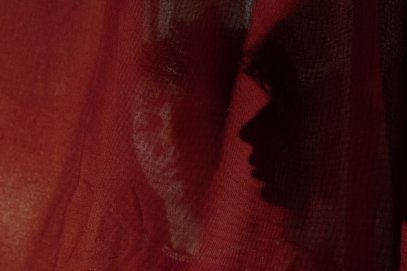
Newly arrived Somali refugees are separated by sex and then made to wait as processing begins. After having their cases processed, they are given clothes, cooking pots and food.

The world’s biggest complex of refugee camps is already so full, there are about 70,000 people living outside it. Mostly women and children, they shelter from the elements in domelike huts made from sticks, plastic sheeting and discarded cartons from aid packets. Toilets are scarce, and water is delivered periodically by truck.

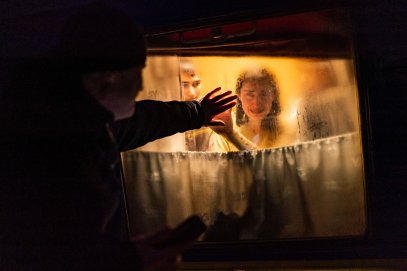
The conditions in Kenya’s far east are all too familiar to the refugees, Somalis fleeing drought and famine in the Horn of Africa. Hawa, 40, who arrived here recently after a 23-day trek with seven children, is disappointed. “What I found is that there is little difference between Somalia and a refugee camp,” she says. The Somali refugees must make a perilous journey from their conflict-ridden country. They navigate for days through forbidding terrain, usually on foot. Most of those who arrive are badly malnourished; aid workers say many children don’t survive the trip, and some die as soon as they arrive.

Inside the Dadaab refugee complex, the world’s largest, 380,000 people are crammed into a space meant to hold a fourth of that number. Built in the 1990s, mainly for Somalis escaping a war between the government and Islamic militants that rages to this day, the complex cannot accommodate the influx of refugees streaming across the border: 30,000 people are estimated to have arrived in June, a steep climb from the monthly average of 5,000 last year. “This is the most problematic and challenging refugee situation in the world,” said António Guterres, chief of UNHCR, the U.N. agency that runs the camps, after a visit in early July.

Under pressure from Guterres and with promises of aid from donors around the world, the Kenyan government may open a new encampment. But it would serve only 40,000 people, not nearly enough to hold the tide of human misery outside the fence.

Sam Loewenberg is a freelance journalist based in Berlin. Loewenberg, the 2012 Neiman Global Health Fellow, previously reported for TIME in Spain. Loewenberg’s trip to Dadaab was funded by the Pulitzer Center for Crisis Reporting. Jehad Nga is a freelance photographer based in Nairobi. Nga recently wrote for LightBox about his family’s experiences in Libya before Gaddafi.

Related Topics: , , , , ,

Latest Posts

Jessica Eaton

Jessica Eaton: Cube, Color, Cosmos

Canadian photographer Jessica Eaton, who recently won the photography prize at the 2012 Hyères Festival, uses her camera to create color invisible to the naked eye.

Read More
Robert Capa—©International Center of Photography/Magnum Photos

UPDATED: Robert Capa, Friend of Anton

Isadora Kosofsky

Senior Love Triangle: Photographs by Isadora Kosofsky

  • hauwa

    What can we do?

  • http://pandasandlemons.wordpress.com carolinelemon

    Reblogged this on pandasandlemons.

blog comments powered by Disqus
Powered by WordPress.com VIP